Understanding electrical current flow is key to how stun guns work and their effectiveness. To test a stun gun's functionality, observe arcs or sparks upon activation. Researchers simulate real-world scenarios through controlled experiments to measure current strength at various contact points. Live testing on safe targets like metal or dummies observes arc, energy output, duration, and sparks while adhering to safety protocols and maintenance for optimal performance verification.
Electrical current spread patterns play a crucial role in understanding the effectiveness of stun guns. This article delves into the fundamental principles of electrical flow and its application in analyzing stun gun performance. We explore how current spreads across various surfaces, offering insights into the device’s reach and impact. Furthermore, practical testing methods are discussed, providing guidance on how to verify if a stun gun is functioning optimally, including essential safety considerations for such assessments.
- Understanding Basic Electrical Current Flow
- Analyzing Stun Gun's Spread Patterns
- Practical Testing Methods for Stun Guns
Understanding Basic Electrical Current Flow
Electrical current flow forms the backbone of understanding how devices function, and particularly, how a stun gun delivers its shock. To grasp this concept, one must visualize electrons moving through a circuit from a power source to a load. This fundamental principle is crucial when examining how energy is transferred and controlled, especially in devices like stun guns where precise current distribution ensures effectiveness and safety.
Testing a stun gun’s functionality involves assessing its ability to generate and conduct electrical current efficiently. A simple way to check if a stun gun is working is by observing the arc or spark it produces when activated. This visual confirmation indicates that the electrical current is flowing as intended, offering a basic yet vital indicator of its operational status.
Analyzing Stun Gun's Spread Patterns

When analyzing the spread pattern of a stun gun, understanding how electrical current flows and disperses is key. To effectively assess its effectiveness, one must consider both the intensity and coverage area of the shock delivered. A successful stun device should consistently produce a wide, evenly distributed current flow that incapacitates the target.
Testing involves simulating real-world scenarios through controlled experiments. By measuring current strength at various points around the contact area, researchers can determine the stun gun’s reach and reliability. This process helps ensure that the weapon functions as advertised when it comes to how to test if a stun gun is working—checking its ability to disable an assailant quickly and safely during self-defense situations.
Practical Testing Methods for Stun Guns
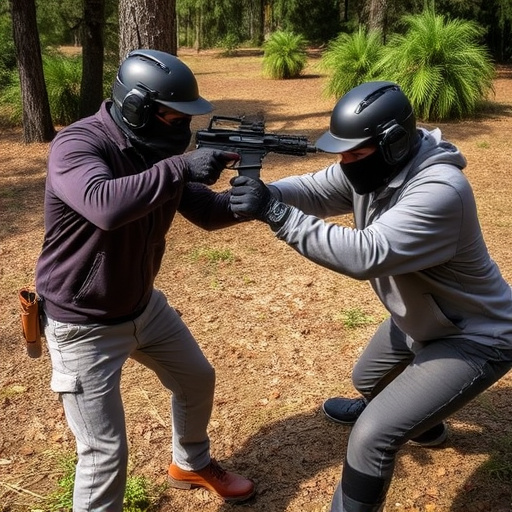
Testing the effectiveness of a stun gun is crucial for ensuring its reliability in real-life scenarios. There are several practical methods to determine if a stun device is functioning correctly. One common approach involves live testing on a safe, controlled target, such as a piece of metal or a special test dummy. This method simulates an actual use case and allows for observation of the stun gun’s performance, including the arc and energy output.
When performing these tests, users should focus on key indicators like the strength of the current, the duration of the stun, and any visible arc or spark production. It’s essential to follow safety protocols, wear protective gear, and ensure a controlled environment to avoid any accidents or harm. Regular testing and maintenance can help maintain optimal performance, ensuring that the stun gun will work as intended when needed most. Additionally, consulting manufacturer guidelines and staying informed about industry standards for stun device testing is highly recommended for users looking to verify their weapon’s effectiveness.
Electrical current spread pattern analysis plays a crucial role in understanding the effectiveness of stun guns. By examining how electricity flows and spreads, we can gain insights into the device’s performance. The article has explored basic electrical current flow, delved into specific spread patterns of stun guns, and outlined practical testing methods to ensure these non-lethal weapons function as intended. When evaluating a stun gun’s reliability, it’s essential to consider the precise distribution of current—knowing how to test if a stun gun is working accurately determines its safety and efficacy in real-world scenarios.