
Testing stun gun effectiveness involves simulating real-world scenarios with mannequins or volunteers wearing standard attire, considering material resistance, power output, and contact area. Environmental factors like weather and movement should be accounted for to ensure optimal performance under diverse conditions, thereby confirming the weapon's reliability when needed.
Uncover the fascinating science behind voltage penetration with our in-depth exploration of how electrical current behaves when passing through thick fabrics. We delve into the factors influencing voltage transmission, offering a practical guide on testing stun gun effectiveness. Learn about essential methods and considerations for ensuring these life-saving devices function optimally. Discover key insights on how to test if a stun gun is working, empowering you with critical knowledge in emergency situations.
- Understanding Voltage and Its Behavior Through Materials
- Testing Stun Gun Effectiveness: Practical Methods and Considerations
Understanding Voltage and Its Behavior Through Materials
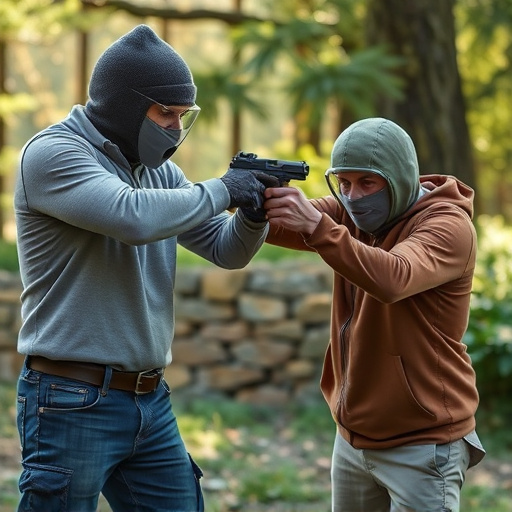
Voltage, a fundamental concept in electricity, represents the potential difference that drives electric charges. When it encounters different materials, its behavior changes significantly. Understanding how voltage interacts with various substances is crucial for several reasons, including ensuring the safety and effectiveness of electrical devices. For instance, when assessing the performance of a stun gun—a device designed to temporarily incapacitate through high-voltage pulses—one must consider how its electric discharge penetrates the target’s clothing.
The penetration depth depends on factors like voltage magnitude, pulse width, and the material’s electrical properties, such as resistivity and thickness. To test if a stun gun is working as intended, one could simulate various scenarios by measuring the voltage drop across different layers of fabric. This process involves using precise instruments to gauge the current flow and ensure the device delivers the required shock, especially when thick clothing is involved. Such an understanding is vital for both personal safety and law enforcement applications.
Testing Stun Gun Effectiveness: Practical Methods and Considerations
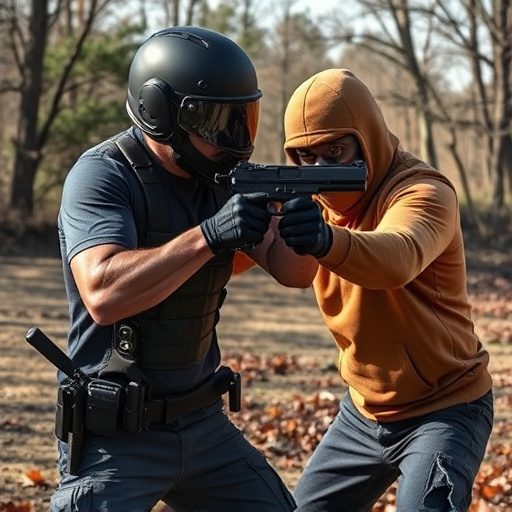
Testing the effectiveness of a stun gun is a crucial step in ensuring its reliability in critical situations. To determine if a stun gun is functioning properly, practical methods involve simulated deployments in controlled environments. This includes testing the device against various materials, especially thick clothing, as it mimics real-world scenarios where suspects might be dressed heavily. The test should assess how well the stun gun penetrates and delivers an effective shock through different fabric layers.
Considerations during these tests are paramount. Factors such as the resistance of the clothing material, the power output of the stun gun, and the contact area between the probe and skin need to be evaluated. Experts suggest using mannequins or trained volunteers dressed in standard clothing to simulate real-world conditions accurately. Additionally, testing should encompass different weather conditions and body movements to account for variable factors that could affect performance. Remember, knowing how your stun gun performs under diverse circumstances ensures its reliability when it matters most.
Understanding voltage penetration through thick clothing is crucial for evaluating the effectiveness of stun guns. By exploring the behavior of voltage in various materials, we can better test and ensure these devices function as intended. When it comes to checking if a stun gun is working, practical methods include simulated testing with known materials and real-world scenarios. Remember that proper consideration of factors like clothing thickness and material composition is essential for accurate assessments.